
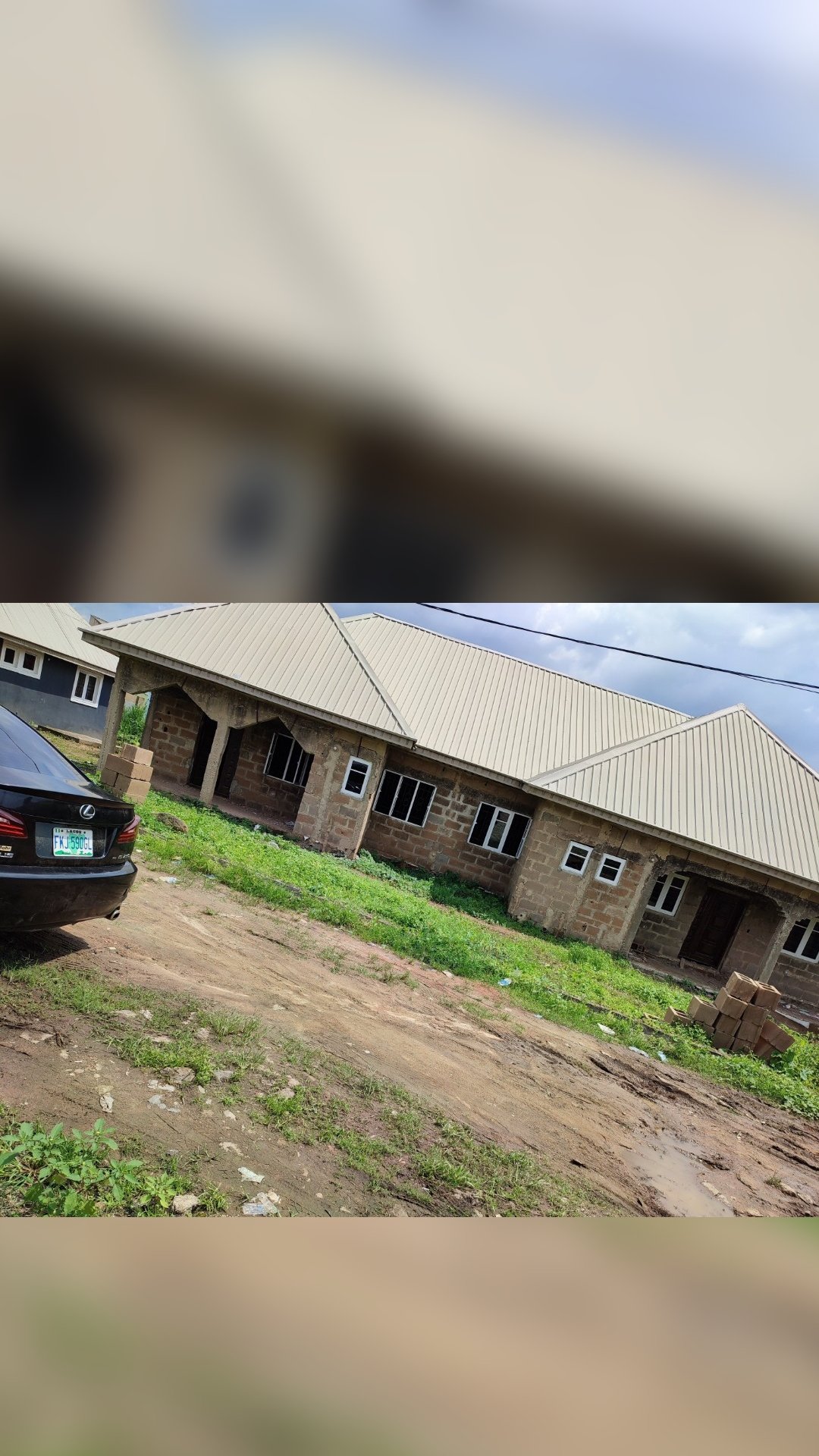
An article was released recently about how owning a house is a liability.
It was readily confusing especially because the first argument I viewed was from a Nigerian content creator. He implored young people to refrain from owning houses, and went further to describe how his father’s house became a liability (the dad built a house at about 30 years of age and somewhere down the line, the house started to leak and the dad couldn’t maintain it till his pension was paid etc).
I was confused.
Why? I simply couldn’t relate. Well, until I did some research and came across some article which I assume is what spurred the various bants. This article was written by someone who lives in the United Kingdom and who expressly weighed mortgaged houses against rented apartments.
It is essential to weigh observations before absorbing and imbibing them. The Nigerian culture and economic climate is way different from that of the United Kingdom or any other countries in that category.
The Nigerian economy is highly unstable and as such, unpredictable. A man who is worth 50M naira today just might struggle financially in another few months. Further, this is a country where not only is unemployment fashionable, there is insecurity even for those who create jobs for themselves. So we have a large number of citizens who live in a country where wealth can’t be sustained for an xyz period of time.
It is therefore safe to say that the average Nigerian does not build a house because he is wealthy, but because he lives in fear of an uncertain tomorrow. And understands that if he is able to control the aspect of putting shelter over his head, it just might be a little easier to struggle for other things in life. (Of course there are Nigerians who are flamboyant with their structures, who build luxurious houses that in reality holds no economic sense. These kinds of houses indeed are liabilities except it’s built for money making purposes. While these luxurious houses connote wealth, it costs a fortune to maintain, and as the owner attains a certain age, begins to consider the vanity of his investment…especially when the time comes for the children to chart their own paths in life.
The average Nigerian, if he can, would rather struggle to cut off rent issues from his long list of problems.
Starting with ‘agents’; the fee they bill is usually outrageous, often half as much as the house rent itself. Which makes the initial cost of renting a house rather expensive. One would then argue that that’s a one-off payment, but in recent times there have been high records of dissatisfied tenants. This often results in either having tenants spend so much to renovate a house that isn’t theirs (and with no guarantees of long term stay), or having tenants who change houses too often which isn’t economically wise, considering agency fee amongst other things. Further, rent keeps going up yearly, there is almost an assurance that however much you rent a house today wouldn’t be the same you’d pay 12 months from now. That is too much of an uncertainty to lump up with very many other uncertainties we experience in Nigeria.
Nigeria is not the kind of country where one can confidently make a forecast of how he wants his life, or a particular part thereof, to look like in xyz years. Price of almost everything keep going up yearly in Nigeria.
Also, the concept of mortgage is fairly foreign in Nigeria, as it is not common and in places where it exists, it isn’t embraced completely.
The reason for the lack of popularity isn’t far fetched: the high rate of unemployment. If for instance one applys for a mortgage scheme, it will cost about N100,000 a month (depending on the value of the house). The following questions would then arise:

The concept of mortgage can be likened to taking a loan, but for real estate purposes which explains why it usually is a huge debt.
* What percentage of the Nigerian economy have jobs or sustainable businesses?
* Of the employed populace, how many can afford to comfortably part with N100,000 monthly?
* For those who can afford it, is the proposed site for the mortgaged house their choice environment?
* How sure is this applicant that he will have a job 10 years from now or that he will be able to afford the mortgage plan at that time? He can hope, but he has no guarantees.
* Until Nigeria stops making the #japa syndrome look like an attractive alternative, it makes absolutely no sense to sign a mortgage form.
For these reasons above, we don’t even have a lot of affordable mortgage structures available in the country, so the argument lies mostly between building a house and renting one. And the risks of renting a house has been laid out, inclusive of which is how landlords often turn round to sometimes cheat tenants, the most common being that some landlords would just sell off a house (commonly happens after an inheritance).
Understanding the fact that to build or not to build a house is primarily by individual choice, and capability, either choice is good as long as the person involved does she diligence and is comfortable with his choices.
Building (or owning) a house in Nigeria is not luxury at all, as long as the individual understands to build within his means.
It is unrealistic to attempt to build a five room apartment with a N100,000 monthly income. A common mistake that many people make is to not do a proper costing or have an appropriate idea of what it costs to build a house, before they commence; and then they got stuck midway, having invested or tied up so much money.
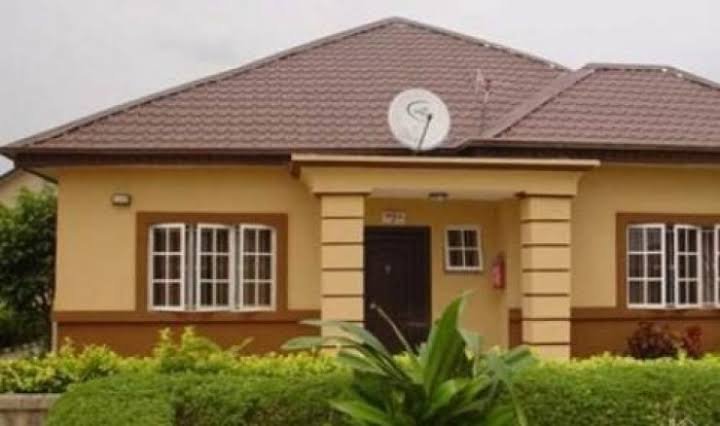
It is wise to determine the purpose of a construction before commencement, so as not to get carried away. It also reduces the risk of not completing the project.
With the exception of land cost (which varies according to location), to build a standard three bedroom bungalow would averagely gulp up about N8,500,000 (with the exclusion of states such as Abuja, Porthacourt and Lagos, where prices of materials and workmanship is higher). This figure covers foundation, raising the structure (inclusive of building materials), workmanship, lintel, roofing (Aluminium sheets), asbestos, windows and burglary, electrical fittings, plumbing, modest closets, and flooring (with tiles).
While the story making rounds also noted that the money that is ‘tied down’ in a property could rather be turned over in a business, it is important to know that this level of risk only works in a stable economy where risks can be properly calculated with fixed variables. As a matter of fact, it is less risky to build a house (within one’s means) with money at hand, than to invest it in a business in Nigeria, because Nigeria has wired the business environment to frustrate businesses, especially the small and medium scale ones.
Nigerian wisdom says: build a modest house if, and when you can, so that you reduce the risk of excessive spending in the next foreseeable future. This is the Nigerian culture. And the only disagreement I have with the culture is the aspect of having a desire to ‘leave properties for the children’.

Securing a child’s future is less about the landed properties left them, but more of intellectual property invested in them.
The best gift parents can give their children is to raise them to be godly, to love mankind, to live appropriately, be respectful, and to be empowered for greatness. And these gifts are not material, even though it may cost a fortune to make some available e.g education. All of these gifts are intellectual and cannot be taken away from the child even if tides turn. This is the way to build a strong generation; a generation who can then embark on a journey in an attempt to bring back the glory of Nigeria.
 The Iyalode
Leave a comment